
Appointment information and forms
Insurance
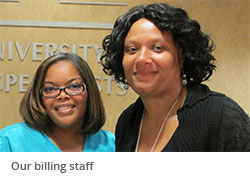
 University Eye Specialists are providers for many different insurance companies. Payment is appreciated at the time of your visit unless other arrangements have been made in advance. We accept Medicare assignment and, as a courtesy, assist in submitting other insurance claims for you if you have all necessary information for your primary and secondary insurance. University Eye Specialists does not participate in any vision plans — your eye exam is billed to your medical insurance plan instead. Please remember to bring your insurance cards and state ID with you so we may copy them for your records. With your help, we can assure that you will receive all the insurance benefits that are available to you through your policy.
Fee for refraction
 The cost for refraction (measurement for glasses or contact lenses) is not covered by Medicare and most other insurance carriers. The doctor's fee for this service is $60.00 and is charged only when a new prescription for glasses is given to you. Contact lens fitting fees are not billable to insurance. We require that you pay for your fitting at the time of service. We provide you with an itemized receipt that you can submit to your insurance plan if you choose.
Download Forms
Arrive prepared for your appointment
When you have your first eye exam at University Eye Specialists, please plan on spending one and one-half hours in our office. Your examination may be longer depending on the severity of your condition or other specialized testing. Your comprehensive exam will include dilation of your pupils. Dilation is an important aspect of your eye examination because it allows us to thoroughly examine your eyes, including your retina. Dilation of the pupils can cause light sensitivity and difficulty seeing up close. Blurred vision typically lasts 3-6 hours. We suggest bringing a pair of sunglasses and someone to drive you home if that is your mode of transportation. You will be able to walk and/or use public transportation without assistance.
 Complementing the surgeons of University Eye Specialists is a dedicated staff of technicians who support the high-quality vision care we deliver to our patients. Our physicians personally train all of our technicians. Depending on your ocular condition and what your doctor needs to thoroughly evaluate your eyes, our ophthalmic technicians also carry out specialized testing.